Relationships
Connect people, accounts, goals, events, evidence, decisions, tasks and outcomes. See how a commitment relates to a customer, or how a decision changes the work toward a goal.
Spine Fabric · Core technology
Spine Fabric is the contextual foundation behind SpineWorkspace. It represents how people, goals, records, evidence, decisions and work relate across the tools your business uses.
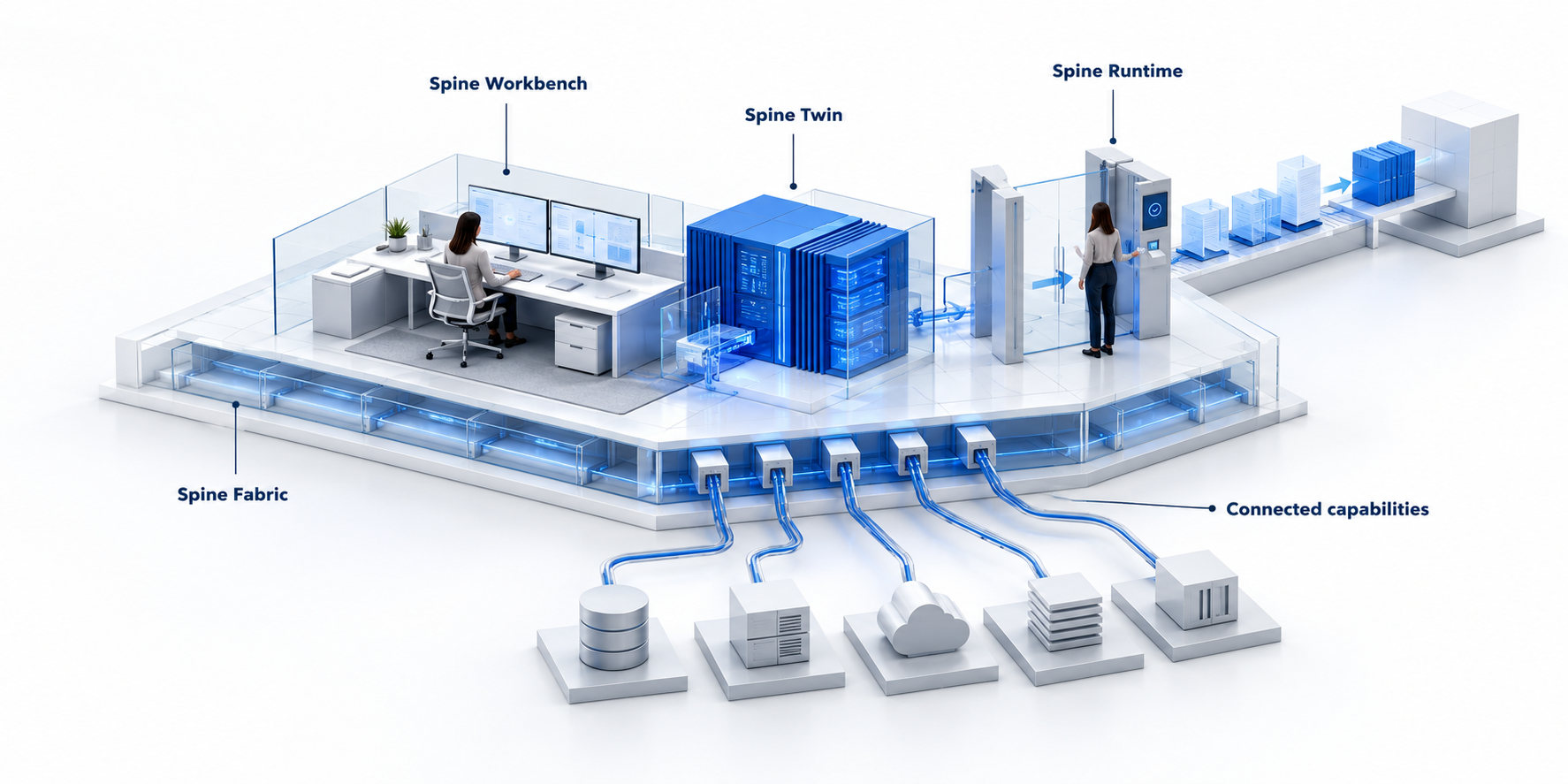
A record tells you what one system knows. Fabric brings the relationships around that record into the context of a goal, responsibility or task.
Connect people, accounts, goals, events, evidence, decisions, tasks and outcomes. See how a commitment relates to a customer, or how a decision changes the work toward a goal.
Distinguish observed records, supporting evidence, interpretations, drafts and verified outcomes. Sources, freshness, conflicts and missing information remain part of the business picture.
Context follows identity, role, policy and authorized scope. Knowing about a situation does not independently grant permission to act on it.
Carry relevant history and earlier decisions into a new session or handoff. People and their Twin can continue the work from its existing context.
These examples show how connected context can support a decision. Each role starts with its own responsibility and the information it is permitted to use.
Operations
Relate the customer commitment, delivery dependency, responsible team and decision history before preparing the next step.
Finance
Bring together the invoice record, contract terms, delivery evidence and approval history for the person reviewing the exception.
Product & engineering
Connect the release goal, open issues, customer impact and previous decisions so a team can understand the tradeoff.
Source systems continue to own their records. Fabric relates authorized information from connected environments, preserving where it came from and why it matters to the current work.
01
Read the relevant records, events, documents and conversations through authorized connections.
02
Link information to the right people, entities, goals and work, retaining its source and history.
03
Bring the permitted context into Workbench and Twin so people can review a situation and prepare options.
04
Carry decisions and observed results forward while governed actions remain subject to the appropriate authority.
How the connection works
The record, the evidence, the tools, the person, and one connection between them.
The record
Customers, tickets, billing, contracts, and approvals stay in the tools that already own them. SpineWorkspace does not create a new home for the record.
The evidence
Email, notes, files, and conversations stay evidence. They help this person with this task. They do not become the record.
The tools
Use Salesforce, the desk, and the files you already have. They do not have to talk to each other directly.
The person
Twin can prepare a draft. Availability is not permission. A person with the right role decides.
One connection
Supported connections bring records and evidence into related business context. Availability and scope depend on the provider and permissions.
Connected capabilities
CRM data, opportunities, contacts
Marketing, deals, engagement data
Billing, subscriptions, invoices
Tickets, support metrics, CSAT
Messages, channels, alerts
Projects, sprints, issue tracking
Docs, wikis, knowledge bases
Email, calendar, drive files
Demonstration, not customer quotes
Illustrative scenario
“A delivery team carries dependencies and prior decisions into an operational handoff.”
Illustrative scenario
“A finance lead compares an invoice exception with its commitments and supporting evidence.”
Illustrative scenario
“An operator sees the evidence behind a suggestion and decides whether it stands.”
Illustrative scenario
“A leader checks that consequential work still waits for a person.”
SPINE INNOVTECH / WHAT'S NEXT
Explore how our technology connects business context, human judgment and governed AI capability. Start with the company behind the thinking or meet SpineWorkspace, our flagship product.